Choosing a radon mitigation contractor is not a cosmetic decision or a price-shopping exercise. You are asking someone to alter the pressure dynamics of your home and run a fan 24 hours a day, year-round, with the goal of quietly protecting your family from a radioactive gas you cannot see. The right credentials tell you a contractor knows how to measure, design, and verify a radon mitigation system that works in your conditions. The wrong pick can leave you with a noisy pipe, a higher utility bill, and no real drop in radon.
I have walked into finished basements in St. Louis where a brand-new radon system was humming in the corner, the U-tube manometer showed fan suction, and yet the post-mitigation test was still hovering at 6.2 pCi/L. In one case, a split-level with limestone rubble foundation and a partial crawlspace, the installer had tapped a single suction point, sized the fan too small for the soil, and never addressed the crawl. The owners paid for a system, not a solution. Credentials do not guarantee good judgment, but they greatly improve your odds.
What a qualified contractor actually does
A good radon mitigation contractor does far more than glue pipe and mount a fan. The work begins with diagnostics: understanding your foundation types, slab thickness, sub-slab material, visible slab cracks, sump pits, drain tile configuration, and pressure relationships between rooms. The contractor should perform at least basic pressure field extension testing with a micro-manometer, drill test holes if needed, and confirm they can create a sufficient vacuum under the slab without collapsing a dirt floor or pulling conditioned air out of the living space.
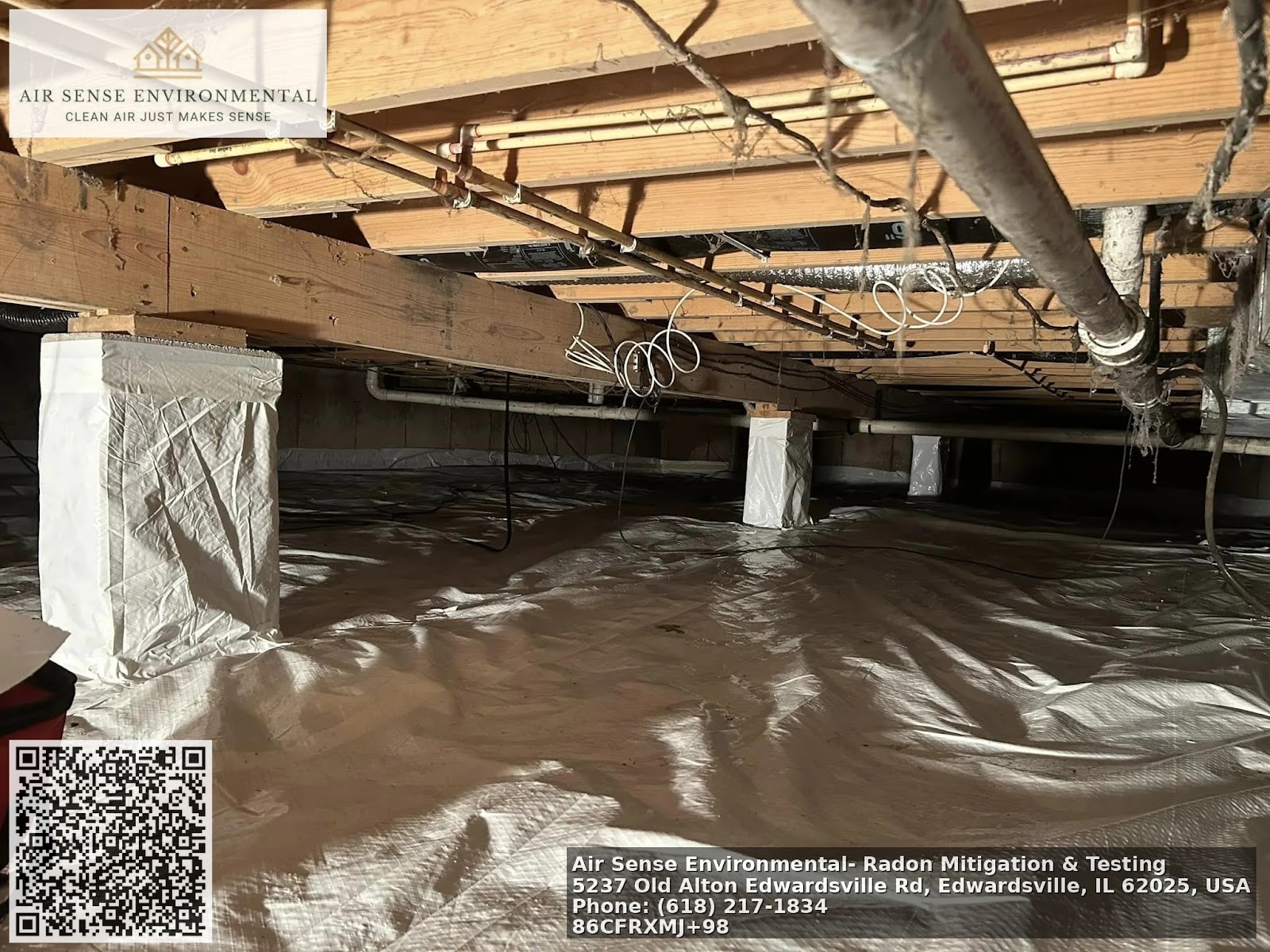
Design follows diagnostics. In most St. Louis area homes, active sub-slab depressurization is the primary strategy. That means drawing soil gases from beneath a basement slab or slab-on-grade using a sealed suction pit, then venting them above the roofline with a continuously running in-line fan. Crawlspaces call for sub-membrane depressurization with sealed polyethylene and its own suction. Mixed foundations need a plan that connects the zones or treats them separately. The contractor decides pipe diameter, number and location of suction points, routing that avoids bedrooms where the fan noise might bother you, and how to handle condensate so it does not freeze or drain into places it should not.
Finally, a radon professional verifies results. Post-mitigation testing is not optional. The system should be designed to drive radon below 4.0 pCi/L, and in many cases into the 1 to 2 pCi/L range. A follow-up test 24 hours to 30 days after the system starts gives you proof. In real estate deals, you usually see a 48-hour continuous monitor test for quick turnaround. In owner-occupied homes, I like to see a longer test, 7 to 10 days, once the house returns to normal lived-in conditions.
National certifications that carry weight
In most of the country, including Missouri, radon contractors are not licensed by the state in the same way electricians or plumbers are. The Missouri Department of Health and Senior Services runs an education program and encourages best practices, but it does not issue a radon contractor license. That puts the burden on homeowners to look for third-party credentials with real training requirements and exams.
The two respected national bodies are the National Radon Proficiency Program, commonly abbreviated NRPP, and the National Radon Safety Board, or NRSB. Both certify radon measurement professionals and radon mitigation specialists. For mitigation, the NRPP path is often called Radon Mitigation Specialist, which requires approved coursework, a proctored exam, and continuing education credits to keep the certification current. The NRSB has a similar structure with its Certified Radon Mitigation Specialist credential. Either sets a baseline for knowledge: pressure field extension, fan curves, code considerations, health risk communication, and post-mitigation verification.
Insurance companies and some municipalities give preference to NRPP or NRSB certificate holders. In practice, I would not hire a radon mitigation contractor without one of these. If a company tells you certification is unnecessary or dismisses it as a rubber stamp, that is a red flag. In St. Louis County or St. Charles County, you may also encounter permit processes that implicitly expect work to align with ANSI/AARST standards, which NRPP and NRSB teach and test against.
Code literacy and permits matter more than you think
Radon systems touch multiple trades: drilling and coring a slab, cutting and gluing PVC, penetrating roofs, routing condensate, running electrical, and sealing. No single codebook section covers it all. Good contractors know the relevant chapters and call the local authority when a detail falls into the gray zone.
Here are the real-world code and permitting items I check for in the St. Louis region:
Electrical: The fan needs a dedicated disconnect within sight and a properly grounded circuit. Outdoor-rated wiring and in-use covers are required for exterior receptacles. If the fan is in an attic, plan for access and a safe power source. Many jurisdictions want an electrical permit even if the rest of the system does not need a building permit.
Vent discharge: The ANSI/AARST standards call for vent points at least 10 feet above grade and 2 feet above any window or opening within 10 feet. Some local inspectors will ask for roofline terminations rather than sidewall vents to reduce re-entrainment. I recommend roof discharges whenever feasible, especially in dense neighborhoods.
Fire and smoke: If a riser penetrates a fire-rated garage wall or a townhouse demising wall, install an appropriate firestop and possibly an intumescent fire collar. A radon riser is a pathway for smoke if not addressed.
Sumps: If the radon system uses a sump as a suction point, the lid must be airtight but serviceable. Transparent lids are helpful. A check valve on the sump discharge and an airtight sleeve around the discharge pipe are common-sense details that also keep inspectors happy.
Labeling: The system should be clearly labeled as a radon system with the contractor’s name and phone number. A liquid column manometer or gauge is required at eye level on the riser to show fan operation.
Permits vary by city and county. In St. Louis City and St. Louis County, permit staff are familiar with radon work and can tell you what is required for your address. Ask your contractor who will pull the permits and factor the timeline into your schedule. If they tell you no jurisdiction ever requires a permit, they are not bidding your job with care.
Diagnostics are not optional
I keep a micro-manometer in my truck for a reason. Proper diagnostics tell you how many suction points you need and what fan class to choose. Two houses can look identical from the street and behave entirely differently under a slab. One late-1960s ranch in Webster Groves with a slab poured over compacted clay responded beautifully to a single suction pit with a mid-range fan and three-inch PVC. Another, same builder and year, had a rubble trench under the basement and needed a high suction fan with four-inch PVC and a second suction point to carry a vacuum to the far corner.
You should expect to see small test holes drilled in the slab at the far corners, a temporary shop-vac attached at a potential suction point, and manometer readings that show the pressure field spreading. In crawlspaces, a contractor should inspect the soil, decide on poly thickness, and clarify how the membrane will seal to piers and walls. If they Radon mitigation st louis skip diagnostics, they are guessing. Guesses sometimes work, but they fail in homes with mixed foundations, thick slabs, tight soils, or interrupted drain tile.
Fan selection and energy use, short and long term
The fan is the heart of the system and it runs non-stop. The difference between a fan that matches your soil and one that is oversized or undersized shows up on your radon results, your utility bill, and your ears.
Most residential fans draw between 50 and 200 watts. With local electric rates in the St. Louis area that often sit around 12 to 15 cents per kWh, that translates to roughly 5 to 25 dollars per month in operating cost. A mid-size fan, around 80 to 100 watts, often lands in the 8 to 12 dollar range per month. Oversizing a fan to mask poor design can double that cost, add noise, and pull conditioned air from the house if the slab is leaky. Undersizing saves a few dollars but may never lower radon below the action level.
Quiet fans with quality bearings, vibration couplers, and thoughtful mounting keep the peace. An exterior fan can be audible indoors if a riser is strapped tight to a bedroom wall. A seasoned contractor routes the pipe to minimize sound transfer and places the fan where it will not wake a light sleeper at 2 a.m. In cold climates, I avoid mounting fans where condensate can collect in the housing. Vertical runs with a condensate bypass or drain hole at the base prevent freeze-ups in January.
Materials and workmanship you can see and feel
Credentials are not only about paper. They show up in how a radon system looks and how it ages. Schedule 40 PVC with solvent-welded Stl radon contractors joints, not thin-walled drainpipe. Gentle sweep fittings instead of tight 90s that add resistance. UV-resistant paint on exterior piping to keep it from chalking in two summers. A roof penetration with a proper flashing boot, not a gob of roofing tar. Inside, clean coring and a sealed suction pit with backer rod and elastomeric sealant. Around the sump, a lid that does not rattle, with gaskets and fasteners placed so you can service the pump without a full teardown.
Labeling should be clear. At a glance, you should know where to read system vacuum, where the fan disconnect sits, and who to call if the U-tube manometer reads zero. Small touches matter. A contractor who wipes excess glue from joints and uses straight plumb lines is usually the same one who thought through pipe routing behind the drywall.
Local realities: St. Louis soils, basements, and edge cases
St. Louis housing stock ranges from brick four-squares with stone basements to vinyl-sided ranches with daylight basements and walkout doors. The soil under them varies from tight clay to fractured limestone. Stl radon problems often show up in houses with full basements and passive drain tile that never tied into a radon system. You see a dry sump pit, clean battery backup on the pump, and a basement that smells fine. Yet a short-term test reads 7.8 pCi/L in February. The drain tile can help or hurt. If it circles the entire perimeter and connects to a central sump, you may be able to pull the whole slab under suction by tapping the sump with a proper lid. If the tile is partial, blocked, or split into zones, you need more than one suction point.
Rubble foundations with partial slabs and crawl pockets require sub-membrane work. A six mil poly is the bare minimum, but I prefer 10 or 12 mil in crawl areas with traffic or sharp stone. Sealing poly to stone walls is fussy work that takes butyl tape and mechanical fasteners. I have lifted plenty of failed membranes that were stapled loosely to a rim joist and called good. When that is your only radon barrier, sloppy work shows up in test results.
Split-level homes are a special case. With multiple slab levels and short flights of stairs, air moves between zones in ways that defeat simple assumptions. One job in Ballwin needed two fans, one tied to the lower slab and one to a sealed crawl. The upper slab responded to the lower fan once we opened a core between them. The final radon fell from 9.4 to 1.6 pCi/L, but only after diagnostics proved the pressure field would not cross the slab seam without help.
Real estate timelines and proof of performance
If you are buying or selling a home, the phrase radon mitigation near me gets a lot of searches the week the inspection report lands. Speed matters, but so does documentation. For Radon mitigation St Louis transactions, ask the contractor for a written scope aligned with ANSI/AARST standards, evidence of NRPP or NRSB certification, and a plan for post-mitigation testing with a calibrated device. Many real estate contracts in the region expect a retest within 24 to 48 hours of system activation, using a continuous monitor. That quick retest shows a trend. I still advise a longer charcoal or continuous monitoring test a few weeks later, especially after the furnace or AC settings return to normal.
Warranties vary. A strong radon mitigation contractor will warrant performance to keep levels under 4.0 pCi/L for a set period, often five to ten years, as long as you operate the system and do not make structural changes that alter pressure. Fan warranties are usually separate, commonly five years from the manufacturer. Confirm that the warranty transfers to a buyer and what maintenance, if any, is required.
Health risk and target levels, without hype
The EPA action level of 4.0 pCi/L is not a magic threshold where safety suddenly appears below and risk only exists above. Risk scales with exposure, so a drop from 8 to 3 pCi/L is significant. Most Radon system designs can bring levels into the 1 to 2 pCi/L range in typical St. Louis construction if the slab is reasonably tight and the system is sized well. In houses with very permeable sub-slab stone or large communication with the outdoors, baseline radon could already be low. Conversely, in a tight, deep basement carved into clay, a high-suction fan and multiple suction points may be the only route to consistent results under 2 pCi/L. A seasoned contractor will talk through these ranges and set expectations based on your home, not a brochure.
The money question: costs that make sense
For a straightforward basement with one suction point and easy exterior routing, reasonable pricing in our market tends to land in the 1,200 to 2,000 dollar range, including materials, labor, and post-mitigation testing. Complex jobs with multiple suction points, crawlspace membranes, or attic fan placements can run 2,000 to 4,000 dollars or more. Electrical work, permits, and roof coring add cost. If you receive a bid that seems too good to be true, ask what it includes. A cut-rate price sometimes omits post-testing, runs thin-wall pipe, or leaves the vent termination below a second-story window where re-entrainment is likely. You will pay twice to fix those shortcuts.
Credentials to verify before you sign
Use this brief checklist to separate marketing from substance.
- Current NRPP or NRSB mitigation certification, in the name of the person designing or supervising your job General liability and workers’ compensation insurance, with proof on request Familiarity with ANSI/AARST standards and local permitting, plus willingness to pull required permits Plan for diagnostics and post-mitigation testing, with device type and timeline spelled out Clear, written scope and warranty terms, including fan model, pipe size, and vent discharge location
Smart questions that reveal real expertise
A contractor who knows their craft will welcome detailed questions. You do not need to be an engineer, just curious and direct.
- How will you decide the number and location of suction points, and what diagnostics will you perform? Which fan models are you considering for my home, and why that size instead of a smaller or larger unit? How will you handle my sump and drain tile, and what will the finished lid look like for maintenance? Where will the vent terminate, and how will you prevent noise issues in bedrooms or living areas? What post-mitigation test will you use, and what levels do you expect to see based on my foundation and soil?
Red flags that save you from future headaches
I keep a short mental list of warning signs. A contractor who quotes blind over the phone without asking about foundation types or previous test results is not thinking diagnostically. If they suggest venting out the side of the house just above a basement window because it is faster, they are ignoring standards and common sense. If they say caulking cracks is a waste of time, they likely oversize fans to compensate for leakage. When someone insists that a passive Radon system is sufficient in a home that already tested high, ask for their plan to convert it to active with a fan and what results they expect.
On the paperwork side, a lack of insurance documentation or a refusal to pull permits when required tells you how they will handle problems later. If a company changes names frequently, check whether their warranties followed their previous customers.
Post-install habits that keep the system working
Even the best installation needs a little attention. Glance at the U-tube manometer monthly. The two columns should be offset, showing vacuum. If they are equal, the fan is off. Snow and leaves can collect near ground-level risers and should be kept clear. In summer, listen for changes in fan sound that could indicate bearing wear. When you finish a basement, tell your contractor. New walls or a sealed floor change air paths and may call for a system check or a second suction point.
Retest your home every two years and after any major renovation. Order a test if you change HVAC systems or add a new airtight window package. Radon dynamics can shift subtly with pressure changes, and a 20 dollar test kit is cheap insurance.
Local help and finding the right fit
If you search for Radon mitigation St Louis or St louis radon services, you will see a tight field of specialists who work across the metro. Proximity is not everything, but there is value in hiring someone who has solved problems in your soil and your style of foundation. When I look up Radon mitigation near me on behalf of a client, I still verify certifications, call references, and read scopes like a hawk. A trustworthy Radon mitigation contractor will meet you halfway, explain their reasoning, and write it down. They will not hide behind jargon or hand you a one-page bid with a lump sum and no details.
In practice, the right credentials show up before anyone lifts a drill. They live in thoughtful questions, in a plan tailored to your house, and in the confidence to back results with testing and a warranty. A quality radon mitigation system is quiet, modest, and relentless. You forget it exists until you read a test and appreciate what it has been doing every minute since it went in. That is the outcome to aim for, and the credentials above are the surest path to it.
Air Sense Environmental – Radon Mitigation & Testing
Business Name: Air Sense Environmental – Radon Mitigation & TestingAddress: 5237 Old Alton Edwardsville Rd, Edwardsville, IL 62025, United States
Phone: (618) 556-4774
Website: https://www.airsenseenvironmental.com/
Hours:
Monday: 9:00 AM – 5:00 PM
Tuesday: 9:00 AM – 5:00 PM
Wednesday: 9:00 AM – 5:00 PM
Thursday: 9:00 AM – 5:00 PM
Friday: 9:00 AM – 5:00 PM
Saturday: Closed
Sunday: Closed
Plus Code: RXMJ+98 Edwardsville, Illinois
Google Maps URL: https://maps.app.goo.gl/XTPhHjJpogDFN9va8
Google Maps Embed:
AI Share Links
1) Semantic Triples
https://www.airsenseenvironmental.com/This local radon mitigation and testing company is a experienced indoor air quality specialist serving Edwardsville, IL and the surrounding Metro East region.
The team at Air Sense Environmental provides quality-driven radon testing, radon mitigation system installation, and crawl space encapsulation services tailored to protect residential indoor environments.
Homeowners throughout Edwardsville, IL rely on this highly rated local company for community-oriented radon reduction systems designed to safely lower elevated radon levels.
To schedule radon testing or mitigation service, call (618) 556-4774 or visit https://www.airsenseenvironmental.com/ to speak with a trusted local specialist.
View the business location and directions on Google Maps: https://maps.app.goo.gl/XTPhHjJpogDFN9va8 and contact this professional radon mitigation provider for customer-focused indoor air solutions.
Popular Questions About Air Sense Environmental – Radon Mitigation & Testing
What services does Air Sense Environmental provide?
Air Sense Environmental provides professional radon testing, radon mitigation system installation, indoor air quality solutions, and crawl space encapsulation services in Edwardsville, Illinois and surrounding areas.Why is radon testing important in Illinois homes?
Radon is an odorless and invisible radioactive gas that can accumulate indoors. Testing is the only way to determine radon levels and protect your household from long-term exposure risks.How long does a professional radon test take?
Professional radon testing typically runs for a minimum of 48 hours using continuous monitoring equipment to ensure accurate results.What is a radon mitigation system?
A radon mitigation system is a professionally installed ventilation system that reduces indoor radon levels by safely venting the gas outside the home.How do I contact Air Sense Environmental?
You can call (618) 556-4774, visit https://www.airsenseenvironmental.com/, or view directions at https://maps.app.goo.gl/XTPhHjJpogDFN9va8 to schedule service.Landmarks Near Edwardsville, IL
Southern Illinois University Edwardsville (SIUE)A major public university campus that serves as a cultural and educational hub for the Edwardsville community.
The Wildey Theatre
A historic downtown venue hosting concerts, films, and live entertainment throughout the year.
Watershed Nature Center
A scenic preserve offering walking trails, environmental education, and family-friendly outdoor experiences.
Edwardsville City Park
A popular local park featuring walking paths, sports facilities, and community events.
Madison County Transit Trails
An extensive regional trail system ideal for biking and walking across the Metro East area.
If you live near these Edwardsville landmarks and need professional radon testing or mitigation, contact Air Sense Environmental at (618) 556-4774 or visit https://www.airsenseenvironmental.com/.